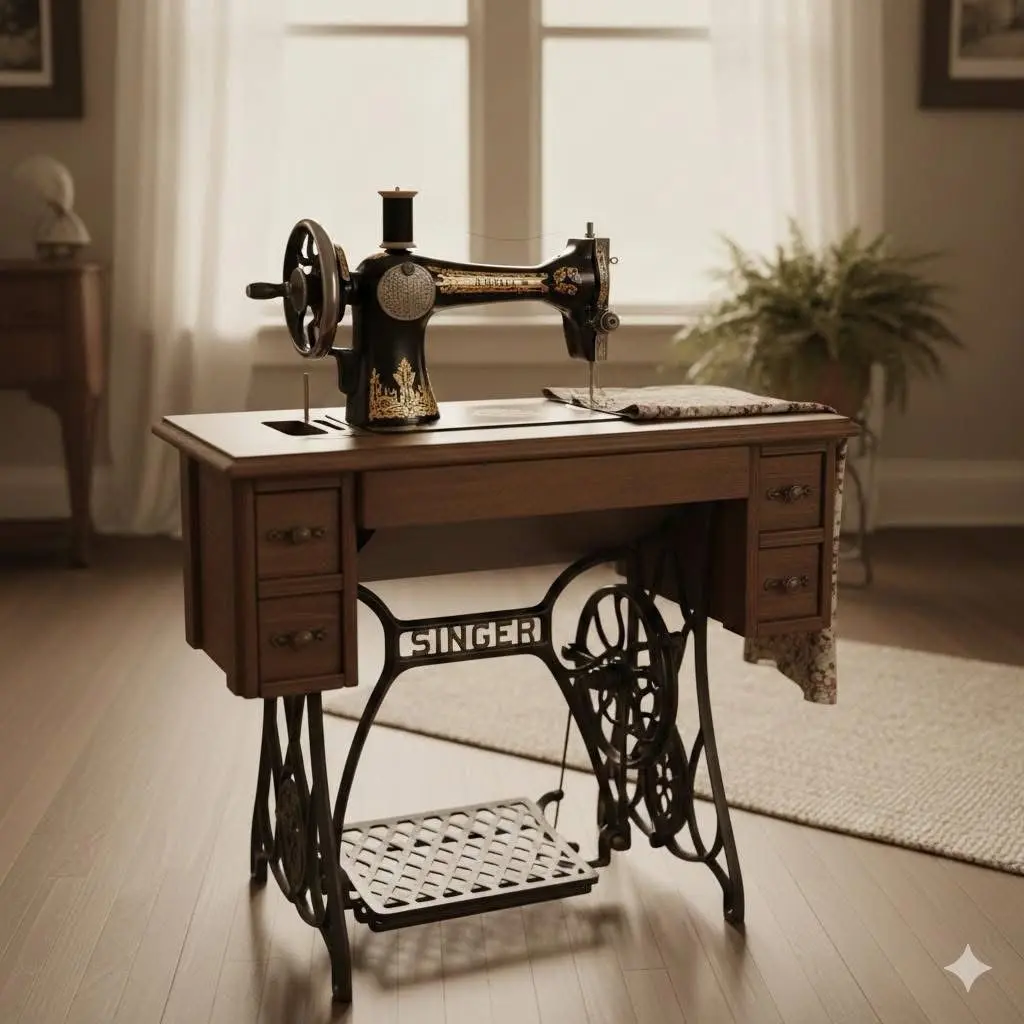
A. The Sewing Machine Revolution:
Isaac Singer transformed from a struggling actor into the entrepreneur who put the sewing machine in nearly every home. His life is a masterclass in innovation, showing how quickly a great idea can change the world when made affordable and accessible.
B. From Failure to Breakthrough
Singer’s early life was full of setbacks. He was a failed actor and his initial inventions—a drilling machine and a carving machine—didn’t make him rich. Disaster struck when an early factory was destroyed.
1850: The Turning Point
In a Boston machine shop, Singer was asked to repair an old, unreliable sewing machine (the Lerow and Blodgett). Instead of just fixing the machine, he decided to reinvent it completely.
The Ingenious Fix
In just 11 days, Singer created a far superior machine. His key improvements made sewing practical for the first time:
• He used a straight, vertical needle instead of a curved one.
• He included a horizontal table to hold the fabric flat.
• His design allowed for continuous, fast stitching (900 stitches per minute).
C. Turning an Invention into an Empire
Having the best machine wasn’t enough. Singer faced lawsuits over patents and the problem of high cost. His partner, Edward Clark, provided the final two steps to global success:
i) Mass Production: They pioneered interchangeable parts and assembly-line production, drastically lowering the cost of manufacturing.
ii). Accessible Financing: Singer and Clark introduced the world’s first widely used “hire-purchase” plan (installment payment), allowing ordinary families to buy a machine for just a few dollars a month.
By 1860, Singer Manufacturing was the world’s largest sewing machine company. The Singer machine revolutionized clothing production, saving millions of hours of labor and empowering women to make and mend clothes quickly at home.
D. Singer’s Blueprint: Instant Lessons
Singer’s success offers four core lessons for founders and innovators:
1. Solve the Real Problem:
He didn’t just repair a broken machine; he reimagined the entire design to make it truly useful.
2. Move Fast & Iterate:
He built a working prototype in days, not months, and secured 22+ patents by constantly improving.
3. Make Innovation Accessible:
He used mass production and a payment plan to ensure millions, not just the wealthy, could own his invention.
4. Persevere Through Setbacks:
He leveraged a failed acting career, a destroyed factory, and constant lawsuits as fuel for his next breakthrough.
The biggest impact comes not just from inventing a better product, but from making it available to everyone.