نبی چرواہے کیوں تھے؟
From Pastures to Prophets: Why God Trained The Greatest Leaders as Shepherds
Leadership is often taught in boardrooms, business schools, and strategy decks. But one of the oldest and most effective leadership training models began in open fields, with dust, silence, and responsibility.
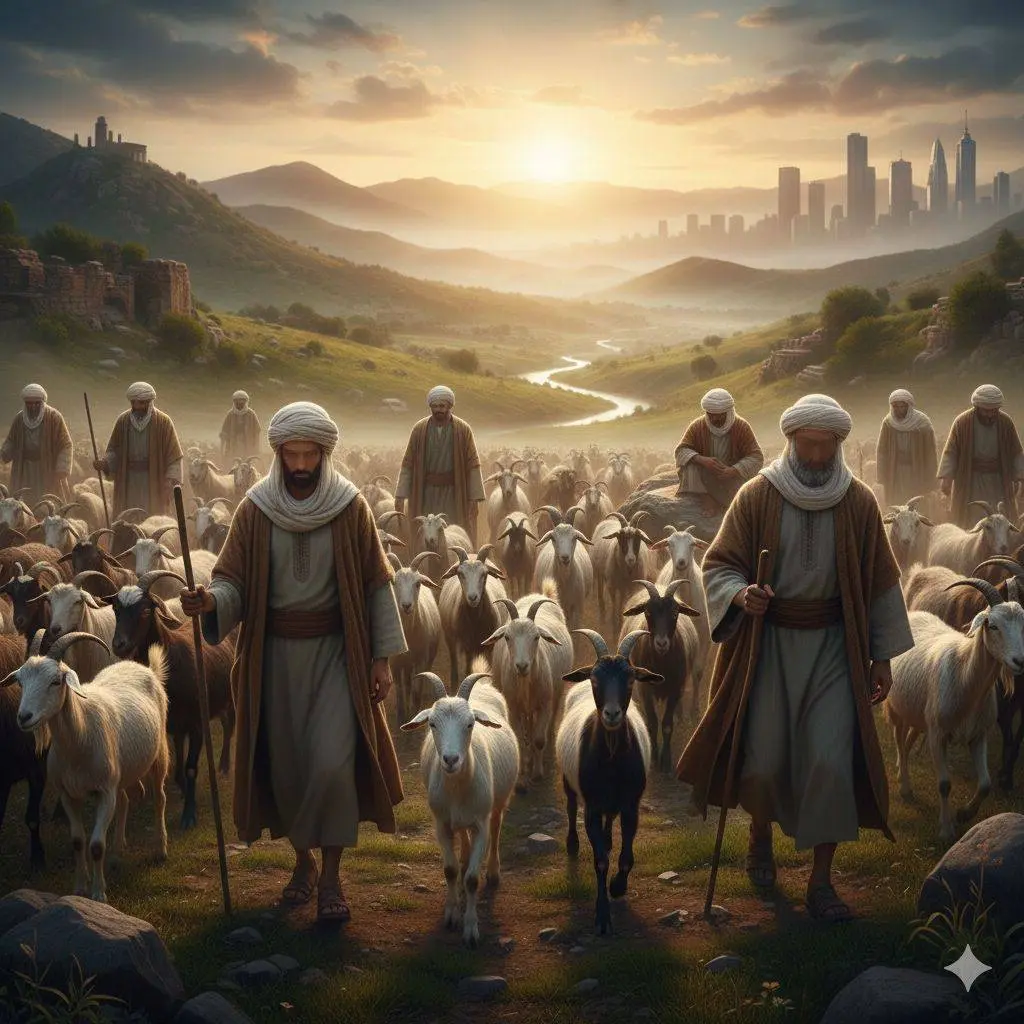
Many prophets in history began their lives as shepherds.
This was not accidental work, and it was not simply because of the economy of the time. Prophet Muhammad ﷺ stated that every prophet sent by God had worked as a shepherd. Shepherding was intentional leadership training before authority was given.
Why shepherding?
Because it teaches responsibility without recognition. A shepherd is accountable for every animal, especially the weakest. There are no applause, no titles, and no shortcuts. Progress is slow, and patience is non‑negotiable.
Why goats specifically?
Goats are independent, stubborn, and easily distracted. They do not follow blindly. Leading goats requires calm guidance, consistency, and presence rather than force. Human teams behave far more like goats than sheep. People think differently, resist control, and move at different speeds.
Shepherding builds leaders who:
Stay patient under pressure
Protect the weakest, not just the strongest
Notice small problems before they become crises
Lead through influence rather than authority
Understand leadership as a trust, not ownership
There is a powerful lesson here for modern corporate leadership.
True leadership is not about control, speed, or visibility. It is about care, accountability, and staying close to the people you lead. The best leaders are not those who walk far ahead of their teams, but those who stay close enough to guide, protect, and correct with wisdom.
The prophetic model shows us something timeless: those who can lead in silence, without recognition, are the ones who can be trusted to lead in moments of influence.
Leadership, at its best, is less about commanding and more about shepherding.